
Culture & Heritage
Hyolmo Culture and Heritage
The Hyolmo people of Helambu possess a rich and ancient cultural heritage rooted in Tibetan Buddhism, with unique traditions in music, dance, art, and architecture.
Hyolmo Culture and Heritage
The Hyolmo people are the indigenous inhabitants of the Helambu region. Their culture is one of Nepal's richest and most well-preserved traditional cultures, recognized by the Nepal government and UNESCO.
Origins
The Hyolmo people trace their origins to Tibet, having migrated to the Helambu region several centuries ago. They brought with them Tibetan Buddhist traditions, language, and customs, which have evolved into a distinct cultural identity over the generations.
Language
The Hyolmo language belongs to the Tibeto-Burman language family. It has its own unique characteristics that distinguish it from Tibetan and other related languages. Efforts are ongoing to preserve and document the language.
Religion
Buddhism is central to Hyolmo life:
- Monasteries: Every village has at least one gompa (monastery)
- Lamas: Buddhist monks and lamas play a key role in community life
- Rituals: Daily prayers, meditation, and seasonal ceremonies
- Art: Thangka painting, butter sculptures, and mandala creation
Music and Dance
Hyolmo music is distinctive and deeply tied to cultural expression:
- Nha Selo: Traditional love songs
- Syabru: Group dances performed during festivals
- Damphu: A traditional drum used in many musical performances
- Chanting: Buddhist chants and mantras in daily and ceremonial life
Festivals
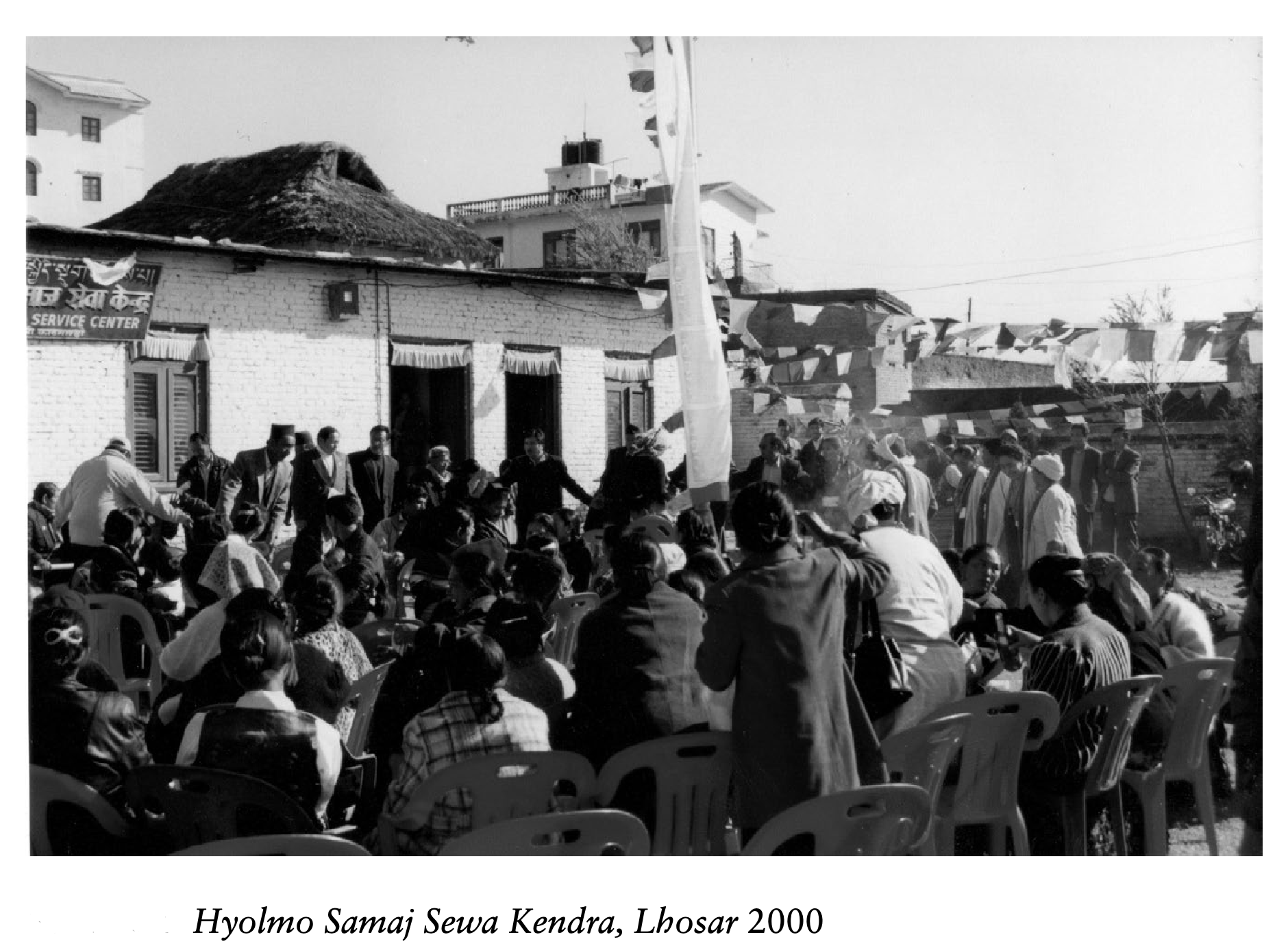
Losar
Tibetan New Year, celebrated with feasts, dances, and monastery visits.
Nara
A unique Hyolmo festival celebrating the harvest and community bonds.
Buddha Jayanti
Celebration of Buddha's birth, enlightenment, and passing.
Saga Dawa
Holy month with increased religious observance.
Tshechu
A spiritual festival dedicated to the wellbeing of all living beings.
Cuisine
Traditional Hyolmo cuisine includes:
- Bakpe: Made from flour, water, potatoes and a touch of salt
- Reldo: Boiled potatoes, mashed into a thick dough or soup
- Dhido: Porridge made from corn or millet flour
- Chhang: Traditional fermented millet drink
- Butter tea: Salted tea with yak butter
Architecture
Traditional Hyolmo architecture reflects both practical and aesthetic sensibilities:
- Thick stone walls for insulation against cold mountain weather
- Intricately carved wooden windows and door frames
- Slate roofs that blend with the mountain landscape
- Prayer flags and mani stones around homes and monasteries
By Helambu AdminCreated: 3/20/2026Updated: 3/24/2026